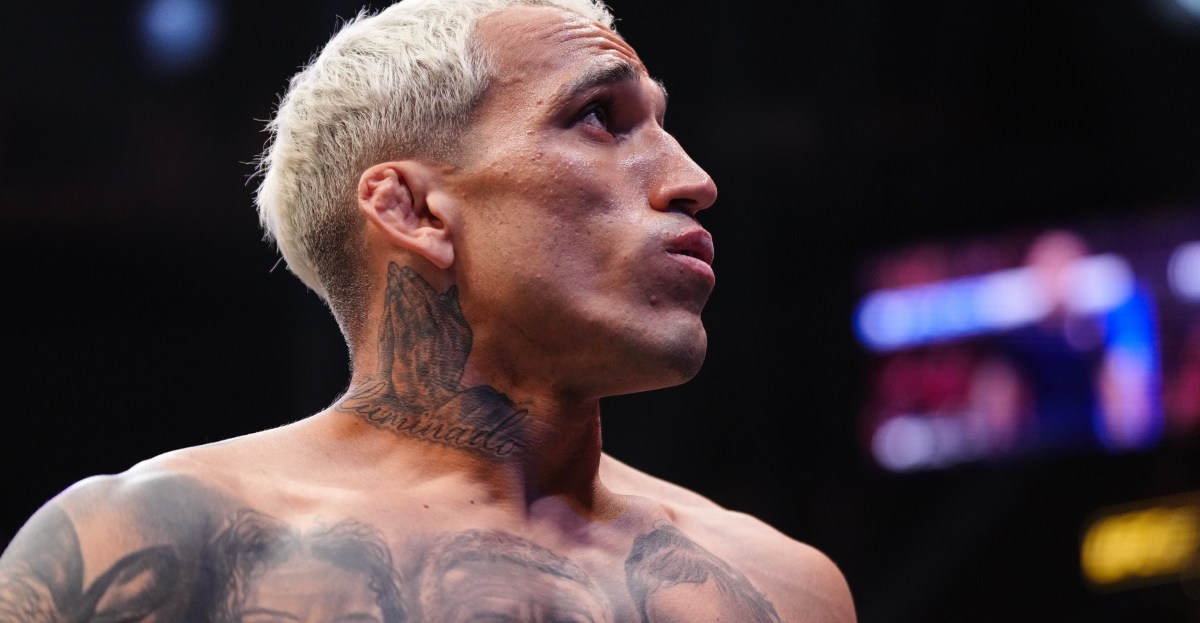
In the high-stakes world of mixed martial arts, where careers are forged and legends are made with every punch, kick, and submission, few names resonate as powerfully as Charles Oliveira and Conor McGregor. While separated by different trajectories in recent years, a potential showdown between the Brazilian grappling phenom and the Irish striking sensation remains one of the most talked-about hypothetical matchups. At the heart of this discussion lies a simple question: Why does Charles Oliveira, a former dominant UFC Lightweight Champion, so ardently pursue a fight with Conor McGregor? The answer, as Oliveira himself has articulated, boils down to two undeniable forces: the quest for an unparalleled legacy and the pursuit of life-changing financial gain.
The Allure of the "Notorious": Unlocking Global Recognition
Conor McGregor isn't just a fighter; he's a phenomenon. His ability to command attention, generate unprecedented pay-per-view numbers, and transcend the sport of MMA is unmatched. Even when sidelined by injury or facing a decline in competitive form, the mere mention of his name sends ripples through the combat sports community. For a fighter like Charles Oliveira, who carved a grueling path to the top, a luta Charles McGregor offers a unique opportunity that no other opponent can provide: unparalleled global exposure and a definitive stamp on his legacy.
Following his spectacular submission victory over Dustin Poirier at UFC 269, Oliveira was quick to respond to McGregor's social media callout. "So what date am I fighting Oliveira?" McGregor had posted. Oliveira's retort was immediate and playful, "What do you think about this weekend? I’m ready, I’m still in town, and there’s an up & coming event. Let’s go baby!" While a fight at that precise moment was impossible due to McGregor's broken leg, the exchange highlighted Oliveira's readiness and strategic thinking. He understood that engaging with McGregor, regardless of the timeline, immediately elevated his profile.
A victory over McGregor, even a McGregor who might not be at his absolute peak, still carries immense weight. It signifies defeating the biggest star the sport has ever seen. This isn't just about rankings or title defenses; it's about cementing a place in history that extends beyond the hardcore fanbase. Oliveira's journey from a young, unrefined prospect to the UFC's all-time record holder for most finishes and submission wins is a testament to his perseverance. Adding a win over 'The Notorious' to his resume would not only validate his reign but also introduce him to a vast new audience, solidifying his status as one of the greatest lightweight champions of all time.
A Champion's Pragmatism: Legacy Beyond the Belt
For many fighters, the championship belt is the ultimate prize, the culmination of years of sacrifice and dedication. And while Charles Oliveira cherished his time as champion, his perspective on the fight game, particularly after achieving the pinnacle, evolved. He openly stated, "If I had the chance to fight Conor for money today, I would. The belt is mine and continues being mine. We’ll continue building our legacy and making history." This sentiment speaks volumes about the layered motivations of an elite athlete.
Oliveira, known as 'do Bronx' for his roots in the favelas of Brazil, worked for over a decade, enduring numerous ups and downs before finally claiming the 155-pound title. His journey instilled in him a profound understanding of the sport's transient nature and the importance of making the most of every opportunity. While defending the belt against top contenders like Justin Gaethje (who he was slated to fight) is crucial for maintaining divisional integrity, facing McGregor offers a different kind of reward – one that contributes to a more expansive legacy that transcends the immediate championship picture.
The potential Oliveira McGregor fight isn't merely about adding another 'W' to his record; it's about capitalizing on the unique ecosystem McGregor has created within the UFC. It’s about being part of an event that will be spoken about for years, watched by millions, and etched into the annals of combat sports history. For a fighter who has poured his life into the cage, this kind of impact is invaluable.
The Financial Imperative: Maximizing a Fighter's Prime
Beyond the glory and the historical significance, there's an undeniable, practical truth in professional fighting: it's a brutal, short-lived career. Fighters put their bodies on the line, suffer injuries, and endure grueling training camps, all for a finite window of opportunity. This is where the financial incentive of a luta Charles McGregor becomes not just attractive, but arguably essential for a fighter looking to secure their future.
Conor McGregor has headlined the top six most successful pay-per-view events in UFC history. His fights generate staggering revenue, and participating in such an event guarantees a life-changing payday for his opponent. Oliveira candidly acknowledged this reality, stating, "Of course, no one’s a fool. ‘No, I’ll fight someone else because of the belt, leave Conor alone’ — who’s going to do that? Only a fool." He elaborated further, explaining his motivations: "We have to think about our families, our children, think about what we can do down the line."
For many athletes, especially those from humble beginnings like Oliveira, financial security isn't a luxury; it's a necessity. A single fight against McGregor could yield more earnings than several championship defenses combined, providing a foundation for his family's future long after his fighting career concludes. This pragmatic approach is not a sign of disrespect for the belt or the division, but rather a mature understanding of the business side of the sport. It's about making smart choices that benefit him and his loved ones in the long run.
Navigating the Lightweight Landscape: Oliveira's Stance on Queue-Jumping
One of the recurring criticisms leveled against potential McGregor superfights, especially when he's not highly ranked, is the notion of him "jumping the queue" for a title shot. Justin Gaethje, at the time, was considered the rightful next contender for the lightweight strap. However, Oliveira, speaking on MMA Fighting’s Portuguese-language podcast Trocação Franca, had a clear and assertive response to such concerns.
He referenced his own long, arduous climb: "That happened to me. I was the No. 7 in the rankings and wanted to fight [top contenders] and they didn’t want to." Having paid his dues and navigated a notoriously stacked division for over a decade, Oliveira felt he had earned the right to make strategic decisions. As champion (and now a former champion still at the top of the division), he held the power. "The champion has a name now, we’re part of the same organization, and I’ll fight whoever the UFC puts against me," he declared. "If they say it’s Conor, I’ll fight him. If they say it’s Justin, I’ll fight him. I just want to go home now and get some rest with my daughter and go back to the cage as soon as possible."
This perspective showcases Oliveira's confidence and his understanding of how the UFC operates. The promotion ultimately decides who fights whom, but a champion's preference, especially for a high-value bout, carries significant weight. For Oliveira, the potential frustration of other contenders is secondary to the profound personal and financial benefits a luta Charles McGregor would bring.
In conclusion, Charles Oliveira's desire to face Conor McGregor is a meticulously calculated decision, reflecting a deep understanding of both the sport's competitive and commercial facets. It is a quest to solidify an already impressive legacy with a defining victory against the sport's biggest icon, and simultaneously, a pragmatic move to secure life-changing financial stability for himself and his family. While the timing and circumstances for this highly anticipated matchup remain uncertain, the motivations driving Oliveira are clear, compelling, and utterly reflective of a champion who has learned to play the game on his own terms.